
Crypto Trading Basics
What Is a Crypto Exchange? A Beginner’s Guide
By CashQueen Global / QUEENX K & R GLOBAL ·
Introduction
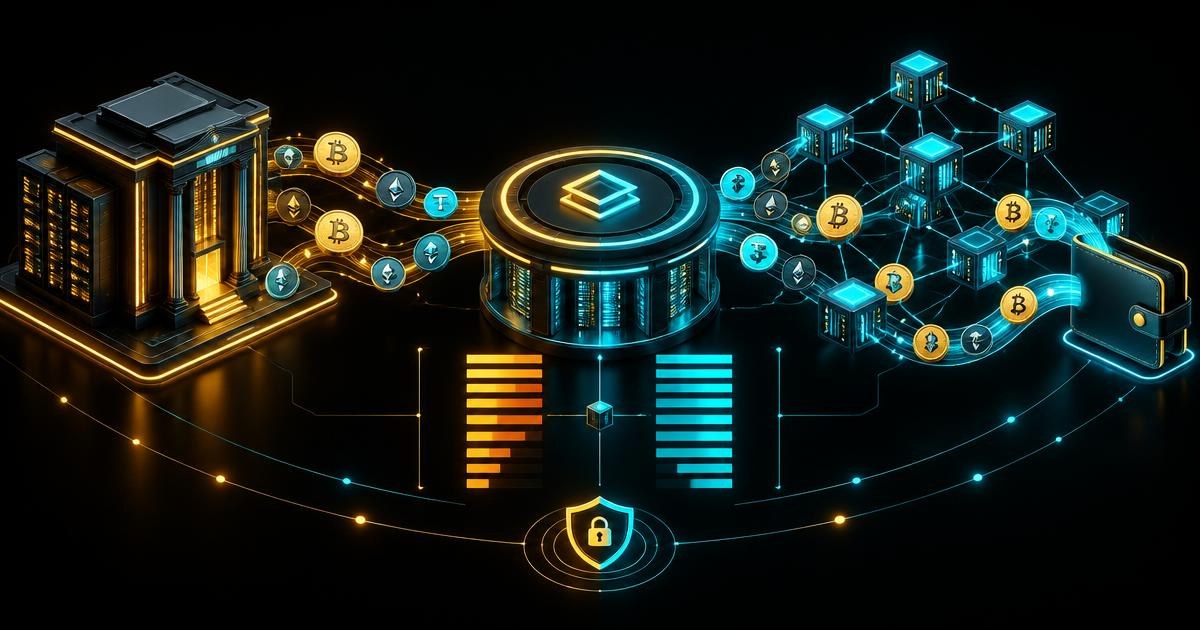
A cryptocurrency exchange is a platform or protocol where people can buy, sell, swap or otherwise trade digital assets, depending on the type of exchange. Not every exchange works the same way: some are run by companies with user accounts, while others run on blockchain smart contracts that you access with a wallet.
Before depositing money or trading, beginners should understand how an exchange works, who controls the assets and what the costs and risks are. This guide is educational information and is not personalized financial advice. For a wider overview, see Crypto Trading for Beginners.
What Is a Crypto Exchange?
A crypto exchange connects people who want to exchange digital assets. Depending on the platform, users may use it for:
- Buying cryptocurrency with supported currencies or assets
- Selling cryptocurrency
- Swapping one asset for another
- Trading one crypto asset against another
- Converting between supported assets
- Accessing spot or, on some platforms, derivatives markets
Not every exchange offers every feature. Available products vary by platform, jurisdiction and account eligibility.
How Does a Crypto Exchange Work?
- 1Create an account or connect a wallet. This depends on whether the exchange is centralized or decentralized.
- 2Complete any required verification. Centralized exchanges may require identity checks.
- 3Deposit funds or authorize a wallet. Follow the platform’s official instructions.
- 4Select a supported trading pair or asset. Check that the pair is available to you.
- 5Choose an order type or swap method. Review price, size and costs before confirming.
- 6Execute the transaction. Confirm only once you understand what will happen.
- 7Review the transaction or order status. Check whether it filled fully, partly or not at all.
- 8Withdraw or hold assets where appropriate. Decide based on your own understanding of custody and risk.
The exact process varies between platforms. This guide does not recommend any particular exchange.
What Is a Centralized Exchange (CEX)?
A centralized exchange is operated by a company or organization that provides the trading platform and associated infrastructure. Common characteristics include:
- Account creation with a username, password and security settings
- Platform-controlled order matching
- Custody options for assets held on the platform
- Deposits and withdrawals processed by the platform
- Identity verification (KYC) that may be required
- Trading interfaces, often with charts and order books
- Spot markets, and on some platforms futures or other derivatives
Users should review the platform’s current terms, supported countries, fees and security practices. Regulatory status differs between platforms and jurisdictions.
What Is a Decentralized Exchange (DEX)?
A decentralized exchange generally uses blockchain-based smart contracts to facilitate swaps or trading without the same type of central operator used by a CEX. Key ideas include:
- Wallet connection: you connect a compatible wallet to interact with the protocol.
- Self-custody: assets generally stay in a wallet you control.
- Smart contracts: code on the blockchain executes the swap.
- On-chain transactions: each trade is recorded on the blockchain.
- Network fees: transactions usually require a network (gas) fee.
- Liquidity: prices depend on the liquidity available for each pair.
- Slippage: the executed price can differ from the expected price.
- Smart-contract risk: bugs or exploits can affect funds.
DEXs can work differently from one another, and they are not automatically safer than centralized exchanges.
CEX vs DEX
| Feature | CEX | DEX |
|---|---|---|
| Operator | A company or organization operates the platform and infrastructure. | Smart contracts on a blockchain facilitate swaps; interfaces may be run by different parties. |
| Account setup | Usually requires creating an account. | Usually no platform account; access is through a compatible wallet. |
| Wallet connection | Not usually required to trade; deposits go to platform-provided addresses. | A compatible wallet is generally connected and used to authorize transactions. |
| Custody model | Often custodial for assets held on the platform, depending on the product. | Generally self-custody; the user controls the wallet’s keys. |
| Transaction execution | Orders are typically matched by the platform’s own systems. | Swaps are executed on-chain through smart contracts. |
| Identity verification | KYC may be required, depending on the platform and jurisdiction. | Often not required by the protocol itself; interfaces and local rules vary. |
| Trading interface | Platform-designed apps and websites, often with order books and charts. | Web interfaces or wallets that interact with the protocol; designs vary. |
| Liquidity | Depends on the platform’s users and market makers. | Depends on liquidity pools or on-chain participants for each pair. |
| Network fees | Usually apply mainly to on-chain deposits and withdrawals. | Network (gas) fees generally apply to each on-chain transaction. |
| Slippage | Possible, especially in fast or thin markets. | Possible, especially with low pool liquidity or large swaps. |
| Smart-contract risk | Less direct for users, though platform and technical risks apply. | Bugs or exploits in smart contracts can affect funds. |
| Withdrawal process | Requested through the platform and subject to its rules, checks and fees. | Assets generally remain in the user’s wallet; no platform withdrawal step. |
This comparison is general and neutral. Exact features differ between platforms, and neither option is better for everyone.
What Is Custody?
Custody broadly refers to who controls the assets, or the credentials that control them.
- Custodial: on a centralized platform, assets may be held in wallets controlled or administered by the platform, depending on the product.
- Non-custodial / self-custody: the user generally controls the wallet’s private keys or seed phrase and is responsible for keeping them safe.
Deposits and Withdrawals
Deposits move funds onto a platform or into a wallet; withdrawals move them out. Always check the asset, the network and the full address before sending. Sending an asset on an unsupported network or to the wrong address can lead to permanent loss. Platforms may apply minimums, fees, processing times, security checks or temporary holds.
What Is a Crypto Wallet?
A cryptocurrency wallet is generally used to access and interact with blockchain assets. An exchange, by comparison, is a platform or protocol used for buying, selling, swapping or trading assets. Some exchanges provide custodial wallet services, but an exchange and a wallet are not interchangeable concepts.
- Public wallet address: an address that can be used to receive compatible blockchain assets.
- Private key: secret information that controls access to assets associated with a wallet and must remain confidential.
- Seed phrase: a confidential recovery phrase that may restore access to a wallet.
- Software wallet: wallet software used through a phone, browser or computer.
- Hardware wallet: a physical device designed to keep private keys separated from ordinary internet-connected devices.
- Custody: who controls the private keys or other credentials that provide access to assets.
For more context on wallets and exchanges, read Crypto Trading for Beginners.
What Are Trading Pairs?
A trading pair expresses the price of one asset in terms of another. In BTC/USDT, BTC is the base asset and USDT is the quote asset. The pair shows how much USDT is used to express the price of BTC. ETH/USDT follows the same structure, with ETH as the base asset and USDT as the quote asset.
These examples are educational only and are not recommendations of any asset.
What Are Crypto Order Types?
Market order
Seeks to buy or sell promptly at the best available price. The final price can differ from the displayed price, especially in fast markets.
Limit order
Buys or sells only at a specified price or better. It may not execute if the market never reaches that price.
Stop or stop-loss order
Where supported, it activates after a specified trigger is reached. It does not guarantee execution at the exact intended price or prevent every loss.
Take-profit order
Where supported, it is intended to close a position after a specified price is reached. Execution and a profitable result are not guaranteed.
Available order types and their exact behaviour vary by platform. No order type is guaranteed to prevent losses, and this guide does not recommend one over another.
What Are Crypto Exchange Fees?
- Trading fees: charges that may apply when an order executes.
- Maker fees: fees that may apply when an order adds liquidity to an order book.
- Taker fees: fees that may apply when an order removes available liquidity.
- Withdrawal fees: charges that may apply when assets are moved off a platform.
- Network fees: blockchain transaction costs that may apply to on-chain transfers.
- Deposit or conversion fees: additional charges that may apply depending on the method, currency or service.
Fee structures vary between platforms and can change. Beginners should check the current official fee schedule before using any platform. A future supporting guide will cover “What Are Maker and Taker Fees?” in more detail.
What Is Liquidity?
Liquidity describes how readily an asset can be bought or sold without causing a large change in its price. It matters because a market with limited buyers or sellers may be harder to enter or exit near the displayed price.
Lower liquidity can contribute to wider spreads, greater price impact and slippage. High liquidity may improve execution conditions, but it does not eliminate trading risk.
What Is Slippage?
Slippage occurs when the final execution price differs from the price a trader expected. It can be affected by market volatility, order size, available liquidity, the trading venue and, for on-chain transactions, network conditions.
Slippage cannot always be completely avoided, and the amount can vary from one transaction to another.
Centralized Exchange Security
- Use a strong, unique password.
- Enable available two-factor authentication.
- Protect the email account connected to the exchange.
- Be careful with phishing links and unsolicited messages.
- Verify website addresses before entering credentials.
- Never share authentication codes.
- Review withdrawal settings and account activity.
- Keep devices and recovery information secure.
No security measure makes an exchange account completely risk-free.
DEX and Smart-Contract Security
DEX users can face smart-contract vulnerabilities, malicious or compromised contracts, fake tokens, phishing websites, wallet-draining approvals, incorrect network selection, irreversible blockchain transactions, low liquidity and slippage.
Users should verify the correct project, contract and network before interacting. A DEX is not automatically safer than a CEX.
What Is an API Connection?
An API connection can allow software applications to communicate with an exchange according to the permissions granted. Depending on the exchange, permissions may include reading account information, reading balances or placing trades. Permissions vary by exchange.
Learn more in our guide to API connections in crypto trading.
Exchange vs Wallet
| Feature | Exchange | Wallet |
|---|---|---|
| Main purpose | Buying, selling, swapping or trading supported assets and products. | Accessing and interacting with compatible blockchain assets. |
| Trading | May provide order books, swaps or other trading tools. | May connect to external protocols but is not itself necessarily an exchange. |
| Asset storage/access | May display balances and provide custodial storage. | Provides access through wallet credentials and compatible networks. |
| Private-key control | The platform often controls keys for custodial balances. | The user generally controls keys in a self-custody wallet. |
| Transactions | Can include internal platform records and blockchain deposits or withdrawals. | Blockchain transactions are authorized from the wallet. |
| Custody | Often custodial, depending on the platform and product. | Often self-custodial, though wallet services vary. |
| Typical use | Accessing markets and trading services. | Holding, sending, receiving or interacting with blockchain applications. |
Exchanges and wallets can serve different purposes. For a broader introduction, see Crypto Trading for Beginners.
Can a Crypto Exchange Guarantee Profit?
No.
A legitimate exchange cannot guarantee trading profits. Cryptocurrency markets can move rapidly, and users can lose part or all of the capital they trade.
Main Risks of Using a Crypto Exchange
Risk 1
Market volatility
Crypto prices can move sharply, creating rapid gains or losses.
Risk 2
Liquidity risk
Limited buyers and sellers may make it harder to transact near an expected price.
Risk 3
Slippage
The final execution price can differ from the price shown when an order is submitted.
Risk 4
Platform or operational risk
Outages, technical faults, insolvency or operational problems may interrupt access or transactions.
Risk 5
Cybersecurity risk
Platforms, protocols, devices and communications can be targeted by attackers.
Risk 6
Account compromise
Stolen login details or authentication codes can give another person access to an account.
Risk 7
Custody risk
Assets held by a platform depend on its custody controls and continued operation.
Risk 8
Smart-contract risk
DEX contracts may contain vulnerabilities or be malicious or compromised.
Risk 9
Network congestion
Busy blockchain networks can delay transactions and increase network costs.
Risk 10
Withdrawal restrictions or delays
Platforms may impose checks, limits, holds or temporary restrictions.
Risk 11
Regulatory or jurisdictional changes
Access, products and requirements can change depending on location.
Risk 12
User error
Wrong addresses, networks, order details or permissions can cause irreversible losses.
Risk 13
Leverage and liquidation risk
Derivatives can magnify losses and may be liquidated under the platform’s rules.
Risk 14
Fraud and phishing
Fake websites, tokens, support contacts and offers may attempt to steal funds or credentials.
Risks differ between platforms, products and jurisdictions.
CEX, DEX, Wallet and Broker: Are They the Same?
| Type | Basic role | Access and custody |
|---|---|---|
| CEX | A company-operated venue for supported buying, selling or trading. | Usually account-based and may hold assets in custody. |
| DEX | A blockchain protocol that facilitates swaps through smart contracts. | Usually accessed with a compatible self-custody wallet. |
| Wallet | A tool for accessing and interacting with blockchain assets. | May be self-custodial or provided as a custodial service. |
| Broker | A service that may arrange or execute transactions for customers. | Depending on the platform and jurisdiction, its services, custody model and legal classification can vary. |
These terms describe different functions. Depending on the platform and jurisdiction, a service may offer more than one function, and legal classifications may vary.
How Should a Beginner Evaluate a Crypto Exchange?
- Supported country or jurisdiction
- Available assets and trading products
- Current fee schedule
- Security features and account recovery
- Withdrawal rules
- Liquidity and available order types
- Operational history and transparency
- Customer support
- Terms and risk disclosures
Readers should independently verify current information before using any platform. CashQueen Global does not recommend a particular exchange.
How Does UTrading AI Relate to a Crypto Exchange?
UTrading AI is a separate software/platform focused on automated and other trading modes. It is not itself a cryptocurrency exchange. Users may connect supported exchanges to trading software through API connections where supported. CashQueen Global provides education, coaching and information around UTrading AI, but does not operate an exchange, hold users' exchange funds or control users' exchange accounts. No performance is guaranteed.
Read the UTrading AI educational guide.
Beginner Checklist
- Understand what a crypto exchange does
- Understand CEX vs DEX
- Understand custody
- Understand wallets and private keys
- Understand trading pairs
- Understand market and limit orders
- Understand fees
- Understand liquidity and slippage
- Understand exchange security
- Understand API permissions before connecting software
- Understand spot vs futures
- Understand leverage and liquidation
- Understand risk management
- Never share private keys, seed phrases or passwords
- Learn before committing capital
Continue Learning
Crypto Trading for Beginners: A Complete Guide to Getting Started
Guide 2What Is an API Connection in Crypto Trading?
Guide 3Spot vs Futures Trading: What’s the Difference?
Guide 4What Is Leverage in Crypto Trading? A Beginner’s Guide
Guide 5Crypto Trading Risk Management for Beginners: A Practical Guide
Guide 6Automated Trading vs Manual Trading: What’s the Difference?
Guide 7UTrading AI: What Is It and How Does Automated Crypto Trading Work?
Frequently Asked Questions
What is a crypto exchange?
What is the difference between a CEX and a DEX?
Do I need a crypto exchange to buy cryptocurrency?
Is a crypto exchange the same as a crypto wallet?
What is a trading pair?
What are crypto exchange fees?
What is slippage on a crypto exchange?
Are crypto exchanges safe?
Can a crypto exchange guarantee profit?
Can UTrading AI connect to a crypto exchange?
About CashQueen Global
CashQueen Global is a brand of QueenX K & R Global, led by Caroline Onobrenufe, operating publicly as CashQueen.
CashQueen Global provides AI, crypto and digital business education and information about UTrading AI.
Focus:
Crypto education, mentorship, awareness and guidance around crypto tools.
UTrading relationship:
CashQueen Global provides promotion, education and coaching around the UTrading software.
Important:
CashQueen Global is NOT a cryptocurrency exchange and does NOT hold users' funds.
Final Takeaway
Understanding exchanges, custody, wallets, fees, liquidity, security and risk is an important foundation before trading. Different platforms and products work in different ways, so beginners should learn the mechanics and independently verify current information.
Learn first. Understand the risks. Then make informed decisions.
Risk Notice
Read the full Risk Disclosure.
Join the CashQueen Global Community
Continue learning through the existing CashQueen Global Telegram community or WhatsApp channel.