
Trading Basics
Automated Trading vs Manual Trading: What's the Difference?
By CashQueen Global / QUEENX K & R GLOBAL ·
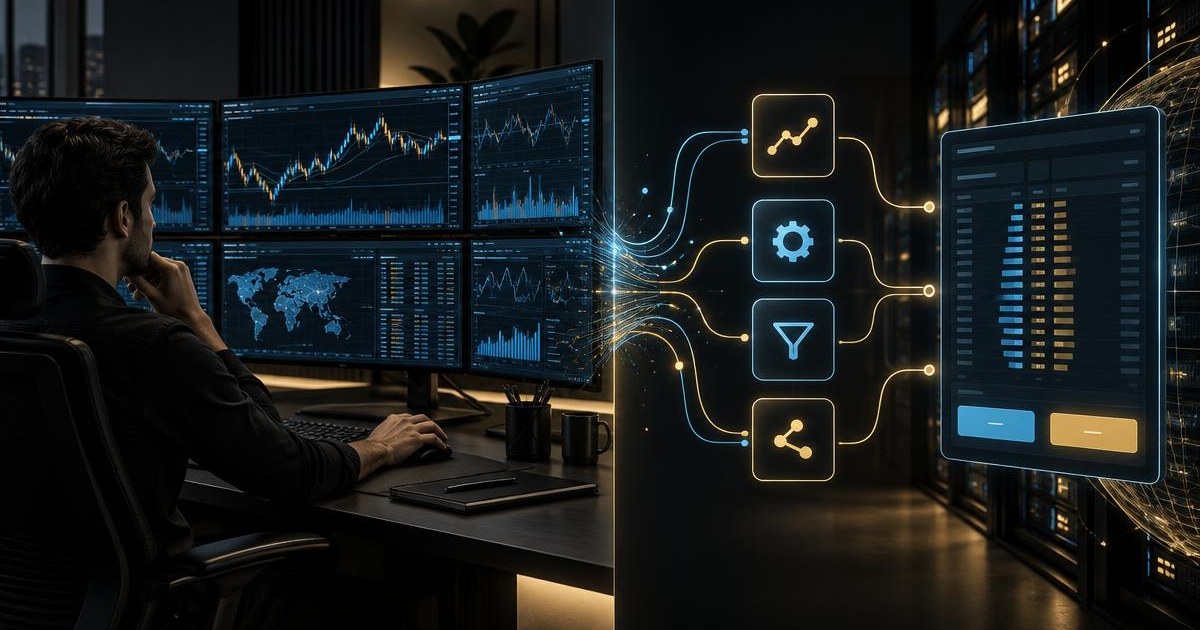
Cryptocurrency traders can interact with markets manually or use software to automate some trading activities. Understanding the difference is useful for anyone exploring crypto trading tools, because the two approaches involve different processes while both remain exposed to risk.
What Is Manual Trading?
Manual trading means the trader personally observes market information and decides when to enter or exit a trade. The trader selects the trading pair or market, determines the order size and other settings, and places and manages each order.
"Manual" does not mean trading without technology. Manual traders still use charts, market data, order tools and exchange interfaces; the key difference is that the person makes and carries out the trading decisions directly.
What Is Automated Trading?
Automated trading uses software to execute predefined or programmed trading actions according to configured rules, signals, strategies or other system logic. Depending on the system, software may evaluate available information and send permitted instructions to an exchange when selected conditions are met.
Automation does not mean software can predict the future. AI and other automated tools cannot guarantee market direction, profitable trades or protection from loss.
Automated vs Manual Trading — Simple Comparison
| Feature | Manual Trading | Automated Trading |
|---|---|---|
| Who/what executes trades | The trader places and manages orders. | Software places and manages permitted orders. |
| Decision-making | The trader evaluates information and decides what to do. | Configured rules, signals, strategies or system logic determine actions. |
| Order execution | The trader submits each order through an exchange interface. | Software sends permitted instructions to the exchange. |
| Speed | Depends on the trader's reaction and input speed. | Can execute configured actions quickly when conditions are met. |
| Monitoring | Usually requires active attention while making and managing trades. | Can reduce manual order placement, but still requires appropriate oversight. |
| Human involvement | Direct involvement in each trading decision and order. | People choose the system, settings, capital allocation and risk controls. |
| Strategy/rules | May combine a plan with discretionary judgement. | Follows the programmed or configured logic available in the system. |
| Emotional influence | Execution can be affected by fear, greed or fatigue. | Can reduce discretionary execution decisions, but human choices remain. |
| Technical dependency | Depends mainly on the exchange, device and connectivity. | Also depends on software, configuration and API connectivity where used. |
| Risk | Market, execution, behavioural, exchange and other risks remain. | Market, strategy, configuration, technical, API, exchange and other risks remain. |
Exact features vary by platform, market and strategy.
How Does Automated Trading Work?
Market information → Trading strategy/rules → Software decision/execution → Exchange API → Order placement → Monitoring
In general, software receives or processes market information, applies the configured strategy or rules, and may send an order instruction to an exchange. An API connection can allow permitted communication between the trading software and exchange. Learn more in our beginner's guide to API connections in crypto trading.
Does Automated Trading Mean You Don't Need to Monitor Your Trades?
No.
Automation can reduce the need to place every order manually, but it does not remove the need for appropriate monitoring and risk management. Software operation, exchange availability, connectivity, market conditions and configuration can all affect trading activity. An automated system should not be assumed safe to leave completely unattended.
What Are the Potential Benefits of Manual Trading?
Possible characteristics include:
- Direct human control over each decision and order.
- The ability to make discretionary decisions.
- The ability to respond to information the trader considers relevant.
- No dependence on a particular automation system for order execution.
Possible limitations include human error, emotional decision-making, slower execution, fatigue and inconsistent discipline. These are possibilities, not guaranteed outcomes.
What Are the Potential Benefits of Automated Trading?
Possible characteristics include:
- Rule-based execution.
- Consistent execution of configured instructions.
- The ability to operate according to programmed conditions.
- Less need to place every order manually.
- The ability to process market information according to the system's design.
Limitations include technical failures, incorrect configuration, API issues, exchange outages, strategy limitations, market conditions outside the strategy's assumptions and cybersecurity considerations. None of the possible benefits guarantees a trading result.
Can Automated Trading Remove Emotions?
Automation can reduce the number of discretionary decisions made during execution, but it does not eliminate all human decision-making. People still decide whether to use a system, which strategy or settings to use, how much capital to allocate, the risk parameters, and when to stop or modify the system. Automation therefore does not completely eliminate emotional risk.
Does Automated Trading Guarantee Profit?
No.
Automated trading is a method of executing trading strategies or instructions. It does not guarantee that the underlying strategy will be profitable. Past performance, backtests and previous results do not guarantee future results.
What Risks Should Beginners Understand?
Market volatility
Cryptocurrency prices can move sharply and unpredictably.
Strategy risk
A strategy may perform poorly or stop working as expected when market conditions change.
Configuration errors
Incorrect pairs, order sizes, limits or risk settings can lead to unintended trades.
API connection risk
Exposed credentials or permissions broader than necessary can create security and account risks.
Exchange/platform risk
Outages, rule changes, service interruptions or platform failures can affect trading.
Technical failures
Software defects, incorrect data or system errors can interrupt or misdirect execution.
Connectivity issues
Internet or service disruptions can delay information, instructions or order updates.
Slippage
An order may fill at a different price than expected, especially in fast or thin markets.
Fees
Trading and platform costs can reduce results and accumulate over repeated transactions.
Liquidity
Limited market depth may make it difficult to enter or exit at the expected price.
Leverage and liquidation
Where leveraged products are used, losses can increase quickly and positions may be liquidated.
Cybersecurity risk
Phishing, compromised devices or stolen credentials may expose accounts and data.
Human oversight risk
Failing to review settings, alerts and activity can allow problems to continue unnoticed.
Automated Trading and UTrading AI
UTrading AI provides trading functionality that can include automated, signal, sync and manual trading modes, depending on the platform and supported features. This does not mean every feature is available on every exchange or at all times. Users should verify current supported markets, exchanges and features through official UTrading information before using the platform.
For more context, read our guide to UTrading AI and automated crypto trading.
Automated Trading vs Manual Trading: What Should Beginners Learn First?
Rather than assuming one method is right for everyone, beginners can first learn to:
- Understand basic crypto market terminology.
- Understand how orders work.
- Understand fees.
- Understand market volatility.
- Understand the risks of leverage. See our Spot vs Futures guide.
- Understand API permissions before connecting an exchange.
- Understand how the selected trading system works.
- Know how to stop or disconnect the system.
- Understand that automation does not guarantee profit.
- Only use capital they can afford to lose.
Frequently Asked Questions
What is manual crypto trading?
What is automated crypto trading?
What is the difference between automated and manual trading?
Does automated trading guarantee profit?
Can automated trading eliminate emotions?
Do automated trading systems need an API?
Can automated trading work without monitoring?
What are the risks of automated crypto trading?
Is manual trading risk-free?
Can UTrading AI be used for both automated and manual trading?
Final Takeaway
Manual and automated trading are different ways of interacting with cryptocurrency markets. Manual trading involves the trader making and executing decisions directly. Automated trading uses software to execute configured rules, strategies or instructions. Neither approach eliminates market risk. Understand the technology, trading mechanics and risks before participating.
Join the CashQueen Global Community
Questions about getting started? Join our Telegram community or chat with us on WhatsApp.
About CashQueen Global
CashQueen Global is an AI, crypto and digital business education brand operated by QueenX K & R Global. It is led by Caroline Onobrenufe, operating publicly as CashQueen.
The brand focuses on crypto education, mentorship, awareness and guidance around crypto tools. CashQueen Global provides promotion, education and coaching around the UTrading software. UTrading is a separate trading software/platform. CashQueen Global is not a cryptocurrency exchange and does not hold, custody or control users' cryptocurrency funds.